This is very helpfull to us all these years later when we are looking into what fabrics would be good for making our costumes out of.
Be sure to check that they are for garments, not home decorations!
Ackermans Repository January to June 1809 on Archive.org

January 1809
From Archive.org
No. 1 is a plush (similar to velvet)
No. 2 is a velvet (likely silk)
No. 3 is a brocade or tissue used for pelisses
No. 4 is a floral satin for evening dresses

From Archive
No. 1 is a figgured satin as worn by the Duchess of Chandos at Her Magesty's Birthday
No. 2 is a gold coloured figured satin as worn by Countess Rothsay at Her Magesty's Birthday
No. 3 is a Bishops blue bombazeen, usefull for morning dresses
No. 4 is a silk stripe shawl used for man's waistcoats (vests) and is made of wool and silk.

March 1809
From Archive
No. 1 is Anglo-Merino (wool) cloth, as fine as muslin (the period kind, not what you buy in the stores)
No. 2 is a new article called "queen's silk" and is used for dresses and pelisses, comes in all colors.
No. 3 is a satin twilled silk for dresses and pelisses
No. 4 is a Persian double silk
All three silks are a half ward wide.

April 1809
From LACMA
From Archive
No. 1&2 is a furnishing calico
No. 3 is Scotia silk, manufactured in Scotland. Mixture of cotton and silk, for pelisse and dresses, half yard wide.
No. 4 is a spotted muslin.

May 1809
From Archive
No. 1 is an Adairian dot for morning dresses, yard and a half wide (54")
No. 2 is a white and lilac figured sarsanet for pelisses. half yard wide
No. 3 is a turkish figgured gauze for dresses in a variety of colors, but mainly the one shown, half yard wide
No. 4 is called printed India rib, similar to marcella, used for men's waistcoats.
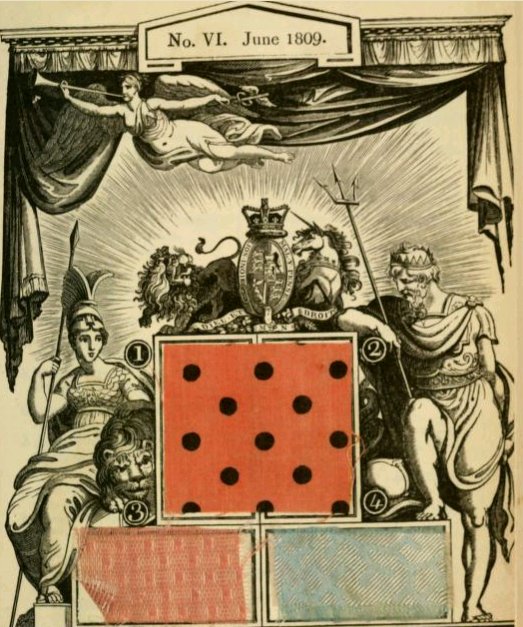
June 1809
From Arcive
No. 1&2 is a cotton for furnishing called Oriental Pink
No. 3 is a lilac spotted gossimer (silk) for full dresses
No. 4 is a white and green coral figgured silk
Ackerman's Repository July to December 1809 on Archive.org

July 1809
From Archive
No. 1 is a yellow printed book muslin for evening dress, an ell wide
No. 2 is a striped mulsin or nainsook, for morning dresses
No. 3 is a printed cambric muslin
No. 4 is a chintz or shawl pattern marcella for men's waistcoats

From Archive
No. 1 is Irish net, for dinner and evening dresses, also tippets and scarves
No. 2 is Merico Crape for ladies dresses is a blend of silk and wool, three quarters of a yard wide
No. 3 is Andalusian washing silk used for robes and pelisses
No. 4 is a printed daimond Marcella quilting for men's waistcoats 3/4 yard wide

September 1809
From Archive
No. 1& 2 is a pattern for furniture
No. 3 is an imperial jonquil gause or Spanish net intended for the best robes, worn over white satin or sarsanet
No. 4 is silt striped quilting for waistcoats, best worn with the summer brown or blue coats now in fashion.

October 1809
From Archive
No. 1 is a corded muslin for morning and afternoon dresses, also morning wrap or simple evening frock, as well as children's trowsers
No. 2 is a Brasilian corded sarsanet for robes, pelisses, and spencers, half yard wide
No. 3 is a Pomona green shawl print in imitation of Indian silk, for morning wraps or pelisses. an ell wide
No. 4 is a rose coloured print book muslin for the ball room or evening party. made up as round dresses or French frocks, must be worn over wtite satin, sarsanet, or glazed cambric. an ell wide.

November 1809
From Archive
No. 1 is a fretwork striped muslin for gowns, robes and pelisses, suitable for almost all styles of dress
No. 2 is an arabian jubille silk
No. 3 is an imperial green shawl print, for home costume, morning wraps and high gowns
No. 4 is a chintz kerseymere for mens waistcoats, best suited for the darker winter coats.

December 1809
From Archive
No. 1 is a gold jubilee muslin, good for dinner or evening
No. 2 is a jubilee shawl cambric for the wrap pelisse, round domestic jacket. could be trimmed with black velvet
No. 3 is called gossamere cloth, blended of silk and wool, for robes, mantles, pelisses. The last two should be lined with sarsanet of contrasting colors.
No. 4 is for men's waistcoats

